|
|

ALBERT D. STURTEVANT
AVIATOR AND HERO 1918
 Albert Dillon Sturtevant
was born in Washington, D.C. on 2 May 1894. He graduated from Phillips
Academay, Yale in 1912.
On 24 March 1917, Sturtevant and 28 others enlisted in the Naval Reserve Forces
as the First Yale
Unit. Two days later, they were all commissioned ensigns. After flight training
in Florida, Sturtevant was designated a Naval Aviator on 1 May 1917 and, in
September,
he received orders for overseas duty. Ensign Sturtevant reported to the group
attached to the Royal Flying Corps station at Felixstowe, England, in October.
Albert Dillon Sturtevant
was born in Washington, D.C. on 2 May 1894. He graduated from Phillips
Academay, Yale in 1912.
On 24 March 1917, Sturtevant and 28 others enlisted in the Naval Reserve Forces
as the First Yale
Unit. Two days later, they were all commissioned ensigns. After flight training
in Florida, Sturtevant was designated a Naval Aviator on 1 May 1917 and, in
September,
he received orders for overseas duty. Ensign Sturtevant reported to the group
attached to the Royal Flying Corps station at Felixstowe, England, in October.
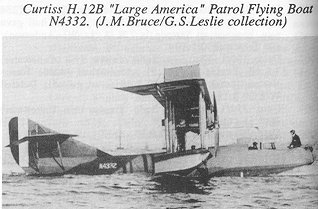 Sturtevant's duties consisted of flying escort for merchantmen crossing the
North Sea from England to Holland. On 15 February 1918, while flying an
escort mission (in a Curtiss H-12B/F2A 'Large America' seaplane S/No N4338 with
a crew of four [T/F/L CC Purdy, Ens AD Sturtevant, Mech AH Stephenson and AAM
SJ Hollidge]), with another identical
plane of his unit (N4339), the two Americans were jumped by a flight of German
planes (five German Hansa-Brandenburg W.29 mono-wing fighter floatplanes)
20 miles SE of North Hinder.
Sturtevant's companion aircraft crew recognized the hopelessness of the odds and
escaped to safety, but Sturtevant, as pilot, was obliged to carry on a running
fight with the enemy.
They brought down at least 2 of their opponents. But driven close to the
Belgian
coast, German
land planes also joined the fight. Now with 16 planes attacking him there was
no hope. When last
seen, Ensign Sturtevant was hit and crippled, falling toward the sea. No trace
was found.
Sturtevant's duties consisted of flying escort for merchantmen crossing the
North Sea from England to Holland. On 15 February 1918, while flying an
escort mission (in a Curtiss H-12B/F2A 'Large America' seaplane S/No N4338 with
a crew of four [T/F/L CC Purdy, Ens AD Sturtevant, Mech AH Stephenson and AAM
SJ Hollidge]), with another identical
plane of his unit (N4339), the two Americans were jumped by a flight of German
planes (five German Hansa-Brandenburg W.29 mono-wing fighter floatplanes)
20 miles SE of North Hinder.
Sturtevant's companion aircraft crew recognized the hopelessness of the odds and
escaped to safety, but Sturtevant, as pilot, was obliged to carry on a running
fight with the enemy.
They brought down at least 2 of their opponents. But driven close to the
Belgian
coast, German
land planes also joined the fight. Now with 16 planes attacking him there was
no hope. When last
seen, Ensign Sturtevant was hit and crippled, falling toward the sea. No trace
was found.
This was his first encounter with the enemy.
For his heroic actions, he was awarded the Navy Cross posthumously.
 An observer in one of the German aircraft (Hansa-Brandenburg W.29 pictured
right), Lieutenant Fritz Stormer, described the ensuing fight "We were
victorious over the Curtiss flying boats that we encountered over the sea and
subsequently engaged in aerial combat. We suffered no casualties and only a few
hits during these battles. We were able to demolish one of the craft in a
formation of Curtiss flying boats because we had the advantage of speed and
maneuverability"
An observer in one of the German aircraft (Hansa-Brandenburg W.29 pictured
right), Lieutenant Fritz Stormer, described the ensuing fight "We were
victorious over the Curtiss flying boats that we encountered over the sea and
subsequently engaged in aerial combat. We suffered no casualties and only a few
hits during these battles. We were able to demolish one of the craft in a
formation of Curtiss flying boats because we had the advantage of speed and
maneuverability"
My thanks to the Naval Historical Center in Washington, D. C. for their
assistance in my research, and Ray Sturtivant for information from his book
''Royal Navy Aircraft Serials & Units 1911 – 1919' available from Air-Britain
publishers in England (see
Rays website
)
President Wilson
wrote personally to Ensign Sturtevant's father, saying: "It was a death in the
field of honor assuredly, and there must be great pride in your heart that such
was the case, but that does not alter the fact that you have lost a beloved son
and my heart goes out to you in genuine sympathy".
Ensign Albert Sturtevant was the first aviator in either the US Army or the US Navy to be brought
down in action in the service of the United States.
Albert's Sister-in-Law (
Mrs. William North Sturtevant
), later sponsored two US warships (
DD240 and DE239
) to be named in his memory (She was still alive at the grand age of 97 going
into 2002!). Updated information kindly supplied by Wm. North Sturtevant, II (
- Albert was his Great Uncle).
E-Mail Queries and any further information to -
 my_email
Website Comments, etc to -
my_email
Last Update 1st February 2010
|
|


